
BORMS Architecture Document
System Architecture Overview
The Busoga One Radio Management System (BORMS) follows a modern web application architecture that emphasizes modularity, scalability, and maintainability. This document outlines the system's architectural design, components, and how they interact.
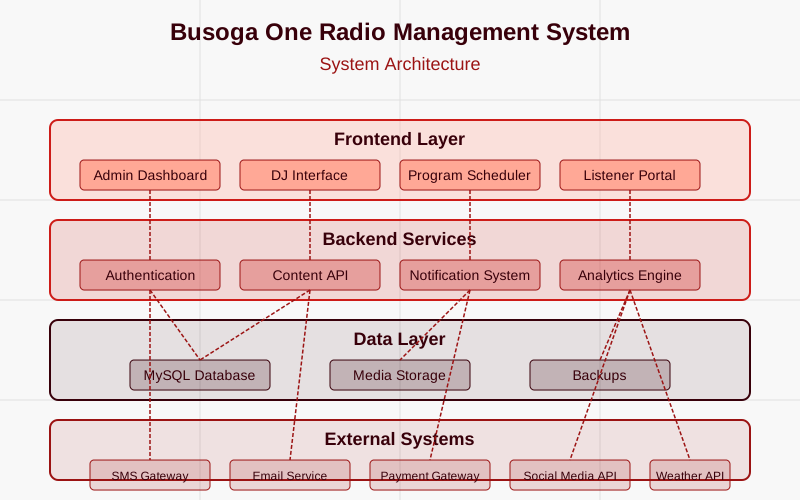
Architecture Pattern
BORMS implements a Model-View-Controller (MVC) architecture pattern with a service layer, leveraging Laravel's implementation of this pattern:
- Models: Represent data structures and business logic
- Views: User interface components (Blade templates)
- Controllers: Handle requests and coordinate responses
- Services: Encapsulate complex business logic
The architecture is enhanced with:
- Repository Pattern: For data access abstraction
- Service Layer: For business logic encapsulation
- Event-Driven Components: For notifications and background processing
Technology Stack
Backend
- Framework: Laravel (Latest Version)
- Admin Panel: Filament
- PHP Version: 8.1+
- Server: Nginx/Apache
Frontend
- Template Engine: Laravel Blade
- CSS Framework: Tailwind CSS + Bootstrap
- JavaScript: jQuery + Modern JS utilities
- Responsive Design: Mobile and desktop optimized interfaces
Database
- Primary Database: MySQL
- Caching: Redis for performance optimization
- Migrations: Laravel migration system for version control
Authentication & Authorization
- Authentication: Laravel Fortify/Sanctum
- Authorization: Role-based access control (RBAC)
- Token Management: JWT (JSON Web Tokens)
Component Architecture
Core Components
-
Authentication System
- User registration and management
- Role and permission management
- Session handling and security
-
Module Management System
- Module registration and discovery
- Feature flagging capability
- Inter-module communication
-
Notification System
- Multi-channel notification dispatcher
- Template management
- Delivery tracking and queuing
-
File Management System
- Secure file uploads and storage
- Asset versioning
- Access control
-
Reporting Engine
- Dynamic report generation
- Export functionality (PDF, CSV, Excel)
- Data visualization components
Business Domain Components
Each functional module is implemented as a discrete component with:
- Dedicated models and database migrations
- Module-specific controllers and services
- Specialized validation rules
- Module configuration
Data Architecture
Database Schema
The database design follows normalized principles with:
- Clear entity relationships
- Appropriate indexes for performance
- Soft deletion for data recovery
- Audit logging for sensitive operations
Key Entities
- Users and Roles
- Clients/Businesses
- Campaigns and Content
- Scheduling and Programming
- Financial Transactions
- Production Assets
- Notifications and Activities
API Architecture
Internal APIs
- RESTful endpoints for frontend components
- Service-to-service communication
- Event broadcasting for real-time updates
External APIs (Future)
- Client access for campaign monitoring
- Integration points for third-party systems
- Webhook support for external event handling
Security Architecture
Authentication
- Multi-factor authentication support
- Password policies and encryption
- Session management and timeout controls
Authorization
- Fine-grained permission system
- Access control at controller and view levels
- Data-level permissions
Data Protection
- HTTPS/TLS for all communications
- Input validation and sanitization
- Protection against common web vulnerabilities (XSS, CSRF, SQL Injection)
- Sensitive data encryption
Deployment Architecture
Development Environment
- Local development with Docker containers
- Standardized environment configuration
- Database seeding for test data
Testing Environment
- Automated testing infrastructure
- Integration test environment
- Performance testing capabilities
Production Environment
- Load-balanced application servers
- Database replication
- Regular backup procedures
- Monitoring and alerting systems
Scalability Considerations
The architecture is designed with scalability in mind:
- Horizontal scaling capability for application servers
- Database optimization for high read/write throughput
- Caching strategies for frequently accessed data
- Asynchronous processing for long-running tasks
Fault Tolerance and Reliability
- Graceful error handling and logging
- Retry mechanisms for external service calls
- Fallback strategies for critical components
- Comprehensive error monitoring
Future Architecture Considerations
The architecture allows for future expansion:
Microservices Evolution
Breaking down high-scale components into independent microservices that can be scaled and deployed separately.
API Gateway
Implementing a central gateway for service aggregation, security, and traffic management.
Enhanced Real-Time Capabilities
Expanding WebSocket and real-time event processing for more interactive experiences.
Mobile Application Backend
Supporting dedicated mobile applications with specialized APIs and authentication.
Advanced Analytics
Implementing data warehousing and business intelligence for deeper insights.